

Screenshots on this page show the previous product branding and navigation. The workflow they
illustrate is current; the interface around it has since been rebranded to Prisma AIRS.
The AI Gateway handles the “what happened, how fast, and how much did it cost?” while FutureAGI answers “how good was the response?”
Why FutureAGI + the AI Gateway?
The integration creates a powerful synergy:- the AI Gateway acts as the operational layer - unifying API calls, managing keys, and monitoring metrics like latency, cost, and request volume
- FutureAGI acts as the quality layer - capturing full request context and running automated evaluations to score model outputs
Getting Started
Prerequisites
Before integrating FutureAGI with the AI Gateway, ensure you have:- Python 3.8+ installed
- API Keys:
- AI Gateway API Key
- FutureAGI API Key
- AI Providers configured in your Model Catalog
Installation
Setting up Environment Variables
Create a.env file in your project root:
Integration Guide
Step 1: Basic Setup
Import the necessary libraries and configure your environment:Step 2: Configure FutureAGI Tracing
Set up comprehensive evaluation tags to automatically assess model responses:The
mapping parameter in EvalTag tells the evaluator where to find the necessary data within the trace. This is crucial for accurate evaluation.Step 3: Define Models and Test Scenarios
Configure the models you want to test and create test scenarios:Step 4: Execute Tests with Automatic Evaluation
Run tests on each model while capturing both operational metrics and quality evaluations:Viewing Results
After running your tests, you’ll have two powerful dashboards to analyze performance:FutureAGI Dashboard - Quality View
Navigate to the Prototype Tab in your FutureAGI Dashboard to find your “Model-Benchmarking” project. Key features:- Automated evaluation scores for each model response
- Detailed trace analysis with quality metrics
- Comparison views across different models
Strata Cloud Manager - Operational View
Access Strata Cloud Manager to see operational metrics for all API calls: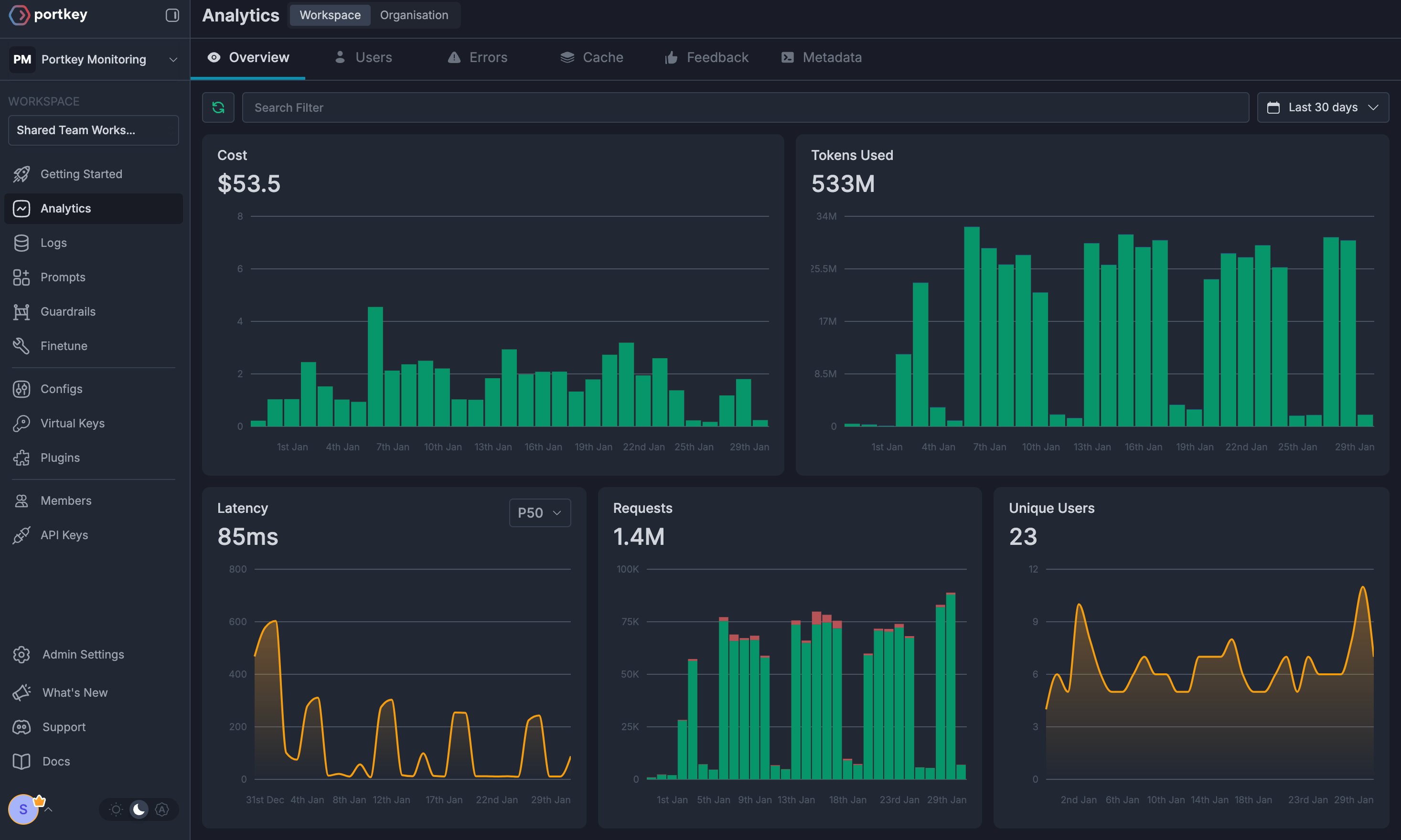
- Unified Logs: Single view of all requests across providers
- Cost Tracking: Automatic cost calculation for every call
- Latency Monitoring: Response time comparisons across models
- Token Usage: Detailed token consumption analytics
Advanced Use Cases
Complex Agentic Workflows
The integration supports tracing complex workflows where you chain multiple LLM calls:CI/CD Integration
Leverage this integration in your CI/CD pipelines for:- Automated Model Testing: Run evaluation suites on new model versions
- Quality Gates: Set thresholds for evaluation scores before deployment
- Performance Monitoring: Track degradation in model quality over time
- Cost Optimization: Monitor and alert on cost spikes
Benefits
Comprehensive Observability
Track both operational metrics (cost, latency) and quality metrics (accuracy, relevance) in one place
Automated Evaluation
No manual evaluation needed - FutureAGI automatically scores responses on multiple dimensions
Multi-Model Comparison
Easily compare different models side-by-side on the same tasks
Production Ready
Built-in alerting and monitoring for your production LLM applications
Example Notebooks
Interactive Colab Notebook
Try out the FutureAGI + AI Gateway integration with our interactive notebook
Next Steps
- Create your FutureAGI account
- Set up AI Providers in the AI Gateway
- Run the example code to see automated evaluation in action
- Customize evaluation tags for your specific use cases
- Integrate into your CI/CD pipeline for continuous model quality monitoring
For advanced configurations and custom evaluators, check out the FutureAGI documentation and reach out to Portkey support for support.